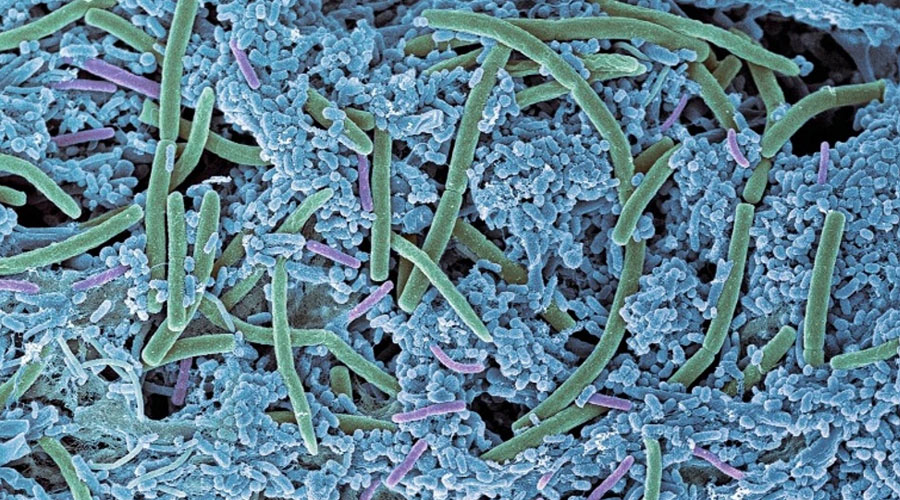
In this article, we discuss the relationship between the persistence of Listeria monocytogenes in food production environments and the formation of biofilm.
Listeria monocytogenes is a Gram-positive bacterium that causes listeriosis, a foodborne illness associated with high rates of mortality (20–30%) and hospitalization, and is particularly dangerous for infants, pregnant women, and the elderly.
The persistence of Listeria monocytogenes in food environments for months or years is linked to outbreaks of listeriosis and results in high costs for food companies.
The mechanisms underlying persistence are unclear, but the prevailing hypothesis is that persistent strains produce more resistant biofilms.
A biofilm is a community of microorganisms attached to a surface, typically enclosed within an extracellular matrix.
LM biofilms can take on various forms, ranging from chains to three-dimensional structures, to single-cell layers with little or no extracellular matrix. The latter consists mainly of extracellular DNA, proteins, and exopolysaccharides, particularly teichoic acids.
Listeria monocytogenes (LM): environmental factors
Several environmental factors influence the formation of Listeria monocytogenes (LM) biofilms.
These factors can alter cell surface properties, adhesion capacity, and the composition of the extracellular matrix, and include:
Temperature
Studies show that the adhesion and biofilm formation of LM increase as the temperature rises to 30–37 °C.
This may be due to changes in the properties of the cell surface, such as hydrophilicity.
Surface material
The properties of the surface material play a significant role.
Topography
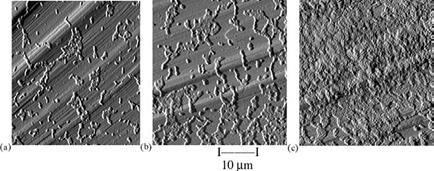
Rougher surfaces, particularly those that are worn or corroded, provide greater opportunities for biofilm formation.
Surface imperfections can trap nutrients and water, promoting bacterial growth and providing protection against cleaning and disinfection.
Hydrophilicity / Hydrophobicity
Studies have shown that LM forms biofilms more quickly and in greater quantities on hydrophilic surfaces such as stainless steel than on hydrophobic materials such as polystyrene.
However, conflicting results have also been reported, which may reflect differences in the strains tested and the experimental designs.
Metals and metal nanoparticles
Metals such as copper and silver have inherent antibacterial properties and can inhibit the formation of LM biofilms.
NaCl concentration
The presence of NaCl can affect the adhesion of LM.
- The adhesion of LM to stainless steel was higher in suspensions containing 0.15 M NaCl than in those containing 0.0015 M NaCl, possibly due to changes in the hydrophobicity of the cell surface.
- In contrast, another study indicated that high concentrations of NaCl (11%) can inhibit biofilm formation.
pH
More acidic conditions, achieved by adding citric or lactic acid to the growth medium, can promote the adhesion of LM to stainless steel.
This may be due to the protonation of negative groups on the cell surface.
Nutrient availability
Nutrient availability is an important factor. Carbon availability can influence the formation of LM biofilms.
Interactions with other microorganisms
The presence of other microorganisms, such as Pseudomonas spp., can either promote or inhibit the formation of LM biofilms, depending on the strain and conditions.
Contact time: Some studies have shown that the difference in biofilm formation between persistent and non-persistent strains of LM becomes apparent as the contact time with the surface increases.
Presence of disinfectant residues
Exposure to sub-inhibitory concentrations of disinfectants can promote biofilm formation.
It is important to note that the effect of these factors can vary depending on the LM strain and the specific experimental conditions, and that there is often a complex interaction among them.
Phenotypic comparisons between persistent and non-persistent strains (PNP)
Many studies have compared biofilm formation between persistent strains and PNP, with mixed results.
Some studies report increased biofilm formation in persistent strains, while others have not observed any differences.
These discrepancies can be attributed to differences in experimental conditions (temperature, surface material, nutrient availability, contact time, culture medium composition), the type of analysis used, definitions of persistence, and the properties of the strains.
The ability to form biofilms can also vary depending on the serotype and lineage of the strains.
Whole-genome sequencing (WGS) studies have sought to identify genetic markers that distinguish persistent strains from PNP, including those associated with biofilm formation.
However, many of these studies have not found a clear correlation between the presence or absence of specific genes and persistence.
It has been hypothesized that differences in the accessory genome, such as the presence of plasmids and prophages, may be related to persistence, but this hypothesis also requires further investigation.
In addition, persistence mechanisms may vary depending on the ecological niche.
Listeria monocytogenes: Challenges and Solutions
Challenges and solutions in research on persistence:
- Lack of a standardized definition of persistence: Definitions vary widely across studies, making it difficult to compare results.
- Non-representative experimental conditions: Many studies use high incubation temperatures and monoculture conditions, which do not reflect real-world food environments.
- Lack of standardized experimental protocols: The use of different assays and experimental conditions makes it difficult to compare results across studies.
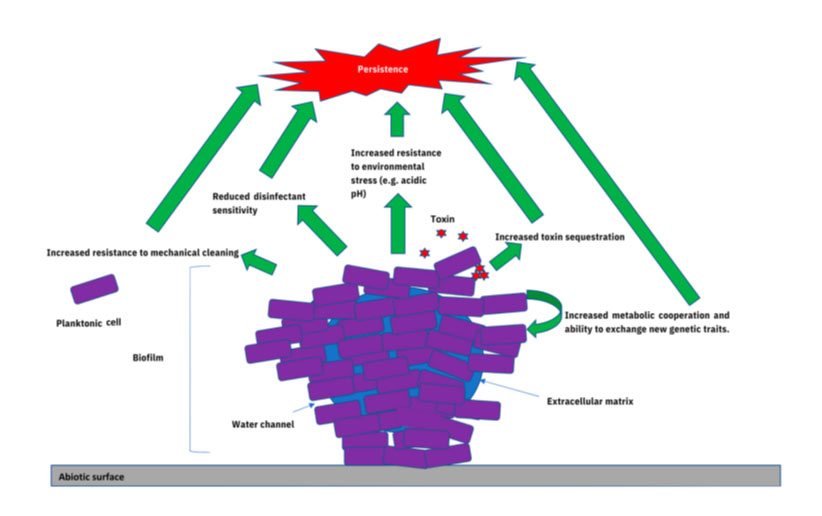
An effective strategy for preventing the formation of biofilms by undesirable microorganisms—such as Listeria monocytogenes —in food production environments is the use of specific enzyme cocktails that target the various components of the biofilm’s extracellular matrix.
Biorem® 3G is the only enzymatic formulation on the market containing 8 different enzyme classes and highly effective even against mature biofilms that are firmly attached to surfaces.
The Piramide team, with its experts, is able to assist its clients not only during the application of enzymatic protocols but also during the diagnostic phase, in order to gather as much information as possible about the presence and composition of the removed biofilm.
If you found the article on Listeria monocytogenes interesting, we invite you to also read: